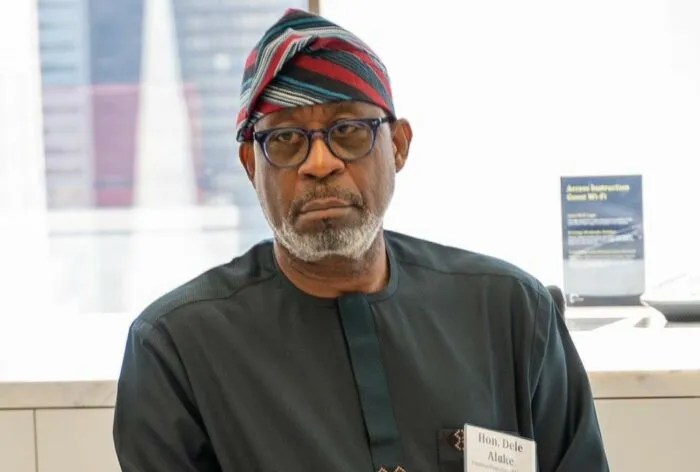
Tribute to the Chief Wolf ,By Major OO Ofudua

Tribute to the Chief Wolf ,By Major OO Ofudua

The first time you saw me was on 12 Dec 15. You saw what I wasn’t seeing in me and took me under your wings. You were not a boss to me but a leader and a father. You groomed me, imparted knowledge and taught me the importance of Mission Command. It’s been 10 years now and you have never for once doubted me or had doubts in my capabilities even when I didn’t know I had such. You took me as your first son and so did every member of your family. 

From the days of 7 Div, I have always called you the Chief Wolf as you always led from the front. You dared the dreaded BHT and your name sent shivers down their spines. You have the best record in the fight against the Insurgents and this is based on your principle of leading from the front and also not leaving any detail to chance. You took risks and also taught me to take calculated risks. You taught me to always be with my men and to conquer fears. You taught me that I should not do it all by myself but delegate and to always reproduce myself wherever I go. You taught me to go 2 down or even lower where possible in any command I hold in order to achieve success. You taught me to never accept status quo and to always think outside the box. You taught me what it means to be a true gentleman officer.

Your hate for dirt is legendary.  I have decided to change the colour of my sitting room to white because any other colour in a house of office is dirty and not your standard. When my wife asked me why I was doing that, I said I leaned it from my father. You also taught me never to look at people on the basis of ethnicity, religion or any other biasness but rather on capacity. You taught me to always take the interest and admin of my subordinates very seriously. 

Your leadership has been a guiding force for me. I will forever be grateful for your wisdom and vision. You’ve been more than just a boss—you’ve been an inspiration and a mentor. Your retirement is hard-earned and well deserved. Thank you for all your contributions over the years; your legacy will continue to inspire me and many others sir. 

Congratulations on your retirement sir. Enjoy every moment of this new adventure. May your days be filled with relaxation and happiness sir.

Shehu Sani to Washington Post: “Trump Was Misled by Anarchists; Nigeria Will Defeat Terrorism”

Shehu Sani to Washington Post: “Trump Was Misled by Anarchists; Nigeria Will Defeat Terrorism”

Former Kaduna Central Senator, Shehu Sani, has faulted former U.S. President Donald Trump over what he described as a “misleading narrative” about Nigeria’s internal security situation, stating that the country will eventually overcome terrorism despite challenges.

In an interview granted to the Washington Post, Sani stated that Trump had been “misinformed and misled by anarchists and propagandists” who distort Nigeria’s realities for political or ideological purposes.

According to the outspoken activist, “Trump’s views about Nigeria and its leadership were shaped by people who thrive in chaos and division. They present a one-sided picture of insecurity and ignore the courage and resilience of Nigerians confronting terrorism daily.”

Sani, who served in the 8th National Assembly and is a well-known human rights campaigner, emphasized that while Nigeria still faces serious threats from insurgents and bandits, the country’s security agencies and citizens remain united in their determination to restore peace and stability.

“Nigeria will defeat terrorism. It may take time and sacrifice, but the people have refused to surrender to fear,” Sani told the Washington Post. “Our diversity and democracy remain stronger than the hate and violence of extremists.”

He also urged the international community, including the United States, to avoid adopting biased reports and instead support Nigeria’s efforts through intelligence sharing, humanitarian assistance, and balanced diplomacy.

Sani further noted that the fight against terrorism requires both military strategy and social justice, stressing that addressing poverty, unemployment, and corruption is essential to achieving lasting peace.

The former lawmaker’s comments come amid renewed global attention to Nigeria’s security situation, following a series of foreign commentaries that have drawn mixed reactions from citizens and policymakers.

Sani concluded by warning against what he termed “weaponization of misinformation” against African nations, saying it undermines democracy and fuels instability.

“Nigeria’s story should be told by Nigerians, not by those who profit from its pain,” he said.

Group Calls on EU,China,UK , Canada to Deny visa to Their Attackers on Social Media platforms.

Group Calls on EU,China,UK , Canada to Deny visa to Their Attackers on Social Media platforms.

The Forum for Growth and Development of Nigeria (FGDN) has urged the European Union (EU), the United Kingdom (UK), the People’s Republic of China, and Canada to impose visa restrictions on individuals engaging in what it described as “coordinated social media attacks” against the organizations and its leadership.

In a statement signed by its National Coordinator, Signed by Dr Adams Shaiza Musa and made available to journalists in Kaduna, the group expressed deep concern over what it termed an increasing wave of “malicious and unhealthy” online campaigns targeted at both local and international organizations.

According to the statement, FGDN—known for its advocacy for national unity, good governance, and youth empowerment—said it has recently noticed some “unwarranted and orchestrated online assaults” aimed at discrediting the international organizations.

“We are disturbed by the level of hate speech and false narratives being peddled on social media against several organizations. These attacks are not only defamatory, but also capable of inciting divisions and discouraging civic engagement between among patriotic Nigerian and international communities.” the statement read.

While reaffirming support for the constitutional right to freedom of expression, the group stressed that such freedom must be exercised responsibly and within the bounds of truth and decency. It warned that the abuse of digital platforms to spread misinformation and launch personal attacks poses a threat to national unity and social cohesion.

“We call on the embassies of the EU member states, China, the United Kingdom, and Canada to take note of individuals who habitually use the internet to malign others. They should be denied visas and international privileges until they desist from such unethical conduct,” FGDN stated.

The group also called on relevant Nigerian agencies, including the National Information Technology Development Agency (NITDA) and the Nigerian Communications Commission (NCC), to strengthen regulatory measures governing online communication in order to curb misinformation and cyberbullying.

However , it reaffirmed FGDN’s commitment to promoting development-oriented dialogue, civic education, and initiatives that foster peace and social progress across Nigeria.

“FGDN remains focused on its mission to contribute positively to national development. We will not support those who seek attention through baseless accusations. Our objective is to unite Nigerians with international communities around ideas that can move the nation forward,” he said.

The statement concluded with an appeal to media practitioners and social commentators to verify information before publishing or sharing it online, urging them to uphold ethics and professionalism in their work.

A Bold Step in Non-Kinetic National Security: Commending DSS and the DG on the N50,000 Cash Empowerment Initiative for 7,774 Vulnerable Nigerians

A Bold Step in Non-Kinetic National Security: Commending DSS and the DG on the N50,000 Cash Empowerment Initiative for 7,774 Vulnerable Nigerians

In a nation where economic hardship continues to test the resilience of its people, the Department of State Services (DSS) under the visionary leadership of Director General Mr. Adeola Oluwafemi Ajayi, has once again demonstrated that true security transcends the barrel of the gun. The recent announcement of a N50,000 one-time cash assistance to 7,774 carefully selected vulnerable Nigerians, 10 from each of the 774 local government areas stands as a landmark achievement in the annals of non-kinetic security operations in Nigeria.

This initiative, totaling approximately N388 million, is not merely a welfare gesture, it is a masterstroke in nation-building, social inclusion and sustainable peace.

The Nineteen Seventeen Northern Consensus Movement for Peace, Unity, Empowerment and Development Initiative (NSNCM) wholeheartedly commends the DSS and its Director General for this people-centered intervention. By deliberately targeting the “poorest of the poor”, widows, the elderly, persons with disabilities, the unemployed, and those burdened by medical challenges. It recognizes that hunger, despair and exclusion are fertile grounds for unrest, radicalization and criminality. In providing direct financial relief, the DSS is not only alleviating immediate suffering but is also fortifying the social fabric of our beloved country.

The selection process itself deserves special praise. Unlike many top-down interventions that often bypass the most deserving, the DSS adopted a grassroots, consultative approach. Security heads, traditional rulers, religious leaders, local government officials, and community stakeholders were all involved in identifying beneficiaries. This ensures transparency, fairness, and cultural relevance. When an 80-year-old grandfather like Pa Segun in the Southwest receives his N50,000 with tears of gratitude, it is not just money changing hands, it is dignity being restored, hope being rekindled, and loyalty to the state being reinforced.

For the beneficiaries, this N50,000 is far more than a cash transfer, it is a lifeline with transformative potential. In rural communities where daily income barely exceeds N500, this sum can cover three months of basic food needs for a family of five. A widow in Sokoto can now purchase grains, cooking oil, and medicine without begging. An unemployed youth in Ebonyi can use the funds to start a small poultry or vegetable farm, generating sustainable income. A disabled artisan in Kano can acquire tools to resume his trade. These are not abstract possibilities, they are real pathways out of poverty, made possible by the DSS’s foresight.

Moreover, this initiative aligns perfectly with global best practices in countering violent extremism. Research from the United Nations and the Institute for Economics and Peace consistently shows that economic empowerment reduces vulnerability to recruitment by criminal or terrorist groups. When citizens feel seen, supported, and valued by state institutions, they become active defenders of peace. The DSS, through this program, is building a human security firewall and deserve our commendation for that. We particularly applaud the DG’s emphasis on “winning hearts and minds.” This is leadership with empathy.

In a time when security agencies are often criticized for heavy-handedness, Mr. Ajayi has shown that strength also lies in compassion. By investing nearly N400 million of its resources into direct citizen support, the DSS is setting a powerful example for other agencies and tiers of government. We call on state governors, local government chairmen, and federal ministries to emulate this model. Imagine the impact if every security outfit in Nigeria allocated just 1% of its budget to similar empowerment schemes.

As the National President of the Nineteen Seventeen Northern Consensus Movement, I urge the DSS to sustain and expand this initiative. Future phases could include skills training, micro-credit follow-ups, and digital literacy programs to ensure long-term self-reliance. We also recommend the establishment of a public monitoring framework, perhaps through civil society partnerships to track outcomes and share success stories nationwide.

In conclusion, the DSS N50,000 cash assistance program is without doubt a beacon of hope in Nigeria’s development journey. It proves that security is not just about intelligence and enforcement but about justice, equity and human dignity.

On behalf of the Nineteen Seventeen Northern Consensus Movement for Peace, Unity, Empowerment and Development Initiative (NSNCM), I extend our deepest gratitude to Director General Adeola Ajayi and the entire DSS family. May this initiative inspire a new era of inclusive governance where no Nigerian is left behind.

Dr Awwal Abdullahi Aliyu
Sarkin Yakin Kanya Babba,
National President
Nineteen Seventeen Northern Consensus Movement For Peace, Unity, Empowerment and Development Initiative (NSNCM)

Nigeria’s Mining Policy Failures: A Sector Tilted Toward China, Strangling Small Miners and Fuelling Illicit Operations.By Biliyaminu Suraj

Nigeria’s Mining Policy Failures: A Sector Tilted Toward China, Strangling Small Miners and Fuelling Illicit Operations.
By Biliyaminu Suraj

biliyasuraj247@yahoo.com

Introduction

Nigeria’s mineral wealth — highlighted by lithium, gold, tin, and rare earths — has the potential to diversify the economy beyond oil. Yet despite high-profile policy announcements and international investment pledges, the country’s mining sector remains mired in structural contradictions: rising foreign dominance, weak enforcement, and an increasingly hostile environment for domestic small-scale miners.

Under Minister Dele Alake’s tenure at the Ministry of Solid Minerals Development, policy reforms have been headline-grabbing and frequent, almost to the degree of weekly announcements. They are invariably framed as transformative but lack detail and wreak of a poor understanding of the mining industry. Critics argue the so-called policy reforms are reinforcing dependency on Chinese capital, penalising local miners through excessive regulation and fees and failing to stem a surge in illegal mining and attendant insecurity.

There are four critical fault-lines that define Nigeria’s current mining policy confusion.

  1. Policy Failures Favouring Chinese Interests

Since 2023, the Nigerian government has aggressively courted Chinese investors in the mining and mineral-processing sector. During a recent visit to China, Minister Dele Alake announced that Chinese-backed companies have invested over US $1.3 billion in Nigeria’s lithium-processing industry since September 2023.

According to Ministry-sourced reports, Nigeria was expected to commission four major Chinese-funded lithium-processing plants by 2025 representing a combined investment of about US $800 million.

While the investment figures are large in headline terms, the actual number of plants currently built and operating remains very limited. One facility in Nasarawa State has been commissioned — a Chinese-led plant processing lithium at “4,000 metric tonnes per day” capacity was inaugurated. Its likely capacity is closer to 3,000 tonnes per day if and when it reaches full production. At this point it is not in production.

But many of the other announced plants — such as the US$600 million facility near the Kaduna-Niger border and the US$200 million outside Abuja — are still described as “slated for commissioning this quarter” or “nearing completion”.

To be clear, they are not yet in production and, if they are anything like the Chinese processing plants in Australia, may never come into economically viable production. Australia has been badly caught out by the promises of large-scale Chinese mineral processing facilities. Australian companies have invested billions of dollars in Chinese technology to process critical minerals only to now find that their investments may have to be written off.

In effect, Nigeria’s mineral governance model risks sliding into what analysts describe as neo-extractivism: the state aligning with foreign capital to extract rents, without building sustainable domestic capacity or transparent oversight. Meanwhile, local and small-scale operators continue to face bureaucratic hurdles. “We have seen preferential treatment for Chinese firms, while local miners struggle to get licences or financing,” said a member of the Miners Association of Nigeria.

  1. Licence Revocations and the Expansion of Illegal Mining

The Alake-led ministry’s campaign to “sanitise” the sector through aggressive licence revocations has generated uncertainty. Hundreds of exploration and small-scale mining titles have been revoked on technicalities or administrative delays, often without due consultation. While the government insists this will curb speculative holding and non-compliance, the result has been the opposite: a vacuum in tenure security that has encouraged illegal mining and worsened insecurity in mineral-rich regions.

Displaced operators and unemployed artisanal miners are migrating into informal mining camps, some of which are now dominated by Chinese buyers and middlemen.

  1. Inflated Chinese Lithium Investments and the Mirage of Local Value Addition

Nigeria’s lithium boom should be a strategic opportunity to enter the global electric-vehicle supply chain. However, the scale and structure of the Chinese-backed investments invite scrutiny.

The announced figures — US$800 million for four processing plants, plus the broader corporate claim of over US$1.3 billion invested by Chinese firms — are large. Yet comparators suggest that many of these plants are not yet fully built or operational.

The publicly-known, functioning facility is the one in Nasarawa, and even that raises questions about transparency of terms, local-content obligations and community benefit.

Analysts at the Natural Resource Governance Institute (NRGI) warn that the Nigerian government has not published the contracts, environmental-impact assessments or local-content rules tied to these deals. Without such transparency, inflated valuations may conceal excessive profit repatriation or tax waivers favouring the investors.

The contradiction is stark: while the government revokes hundreds of local mining licences in the name of efficiency, it signs opaque, billion-dollar deals with foreign conglomerates that may offer minimal technology transfer or local capacity-building.
Nigeria risks falling into a pattern familiar across resource-rich African economies — outsourcing its industrial future to external partners while celebrating “investment” headlines that disguise long-term dependency. Worse still, history across Africa and Asian countries tells us that massive scale Chinese infrastructure development comes with massive repayment obligations which, when defaulted, see national assets under Chinese ownership.

  1. Small-Scale Miners Punished by Escalating Tenement Fees

In mid-2024, the Ministry announced a sweeping revision of mining-licence fees and annual service charges hitting small and indigenous miners hardest. For example, the annual service fee for a Small-Scale Mining Licence (SSML) jumped to ₦260,000, while renewal fees rose to ₦420,000.

For artisanal and small-scale miners – who produce over 70 percent of Nigeria’s solid minerals – the impact has been devastating. Many operate on thin margins and lack access to formal finance.

“These new rates are impossible for us,” said a gold miner from Niger State. “They want to push us out so the big companies can take over.”

Industry lawyers have also criticised the abrupt fee escalation, warning it could drive legitimate operators underground and worsen illegal mining. By making formalisation unaffordable, the policy undermines its own objective of bringing artisanal and small-scale miners into the regulated economy.

Meanwhile, Chinese-backed operations appear largely unaffected, as their capital base allows them to absorb or negotiate favourable terms. The asymmetry reinforces perceptions that Nigeria’s mining reforms are designed to privilege Chinese state-owned investors at the expense of Nigeria’s domestic enterprise.

Conclusion: Reform or Regression?

Nigeria stands at a crossroads. Mining reforms under Minister Alake have been long on rhetoric and short on delivery. The government’s mining policies, though couched in the rhetoric of reform and industrialisation, risk deepening structural inequities. The tilt toward Chinese capital — with announced investment amounts well into the billions but very few operational processing plants so far — is a key concern.

Coupled with opaque licensing decisions and punitive costs for small miners, the reforms collectively undermine the stated goal of building a resilient, inclusive mining economy.

For Nigeria to truly benefit from its mineral wealth, three principles are essential: transparency, local empowerment, and institutional capacity.

Contracts with foreign investors must be publicly disclosed; fee regimes must reflect economic realities, not bureaucratic revenue targets; and the state must strengthen regulatory oversight to curb illegal mining rather than punish small-scale operators. Without such shifts, the mining sector will remain a cautionary tale-–of a nation rich in minerals, yet poor in governance.

God, Guns and Geopolitics: Trump’s Nigeria’s Gambit Rocks Diplomacy

God, Guns and Geopolitics: Trump’s Nigeria’s Gambit Rocks Diplomacy

By Aminu Hussaini Sagagi

“The U.S’s accusation of alleged “Christian Genocide” against Nigeria with a threat of possible military action against the country would constitute a breach of International Law.
Analysts warn that, without recourse to any United Nation’s declaration, however noble the US unilateral intervention might seem within the country’s public policy perspective, the “action” smacks of violation of the very principles that sustain the global order.
Barrister Aminu Hussain Sagagi in this article highlights why Kano State Government align with the Federal Government stand, examining how the US’s threat against Nigeria would further escalate strain relationship and the resultant effect may lead Nigeria to embrace alternative global partners such as China or Russia – a shift that could reshape the regional alliances”.

In a move that has sent ripples through diplomatic circles across Africa, U.S. President Donald J. Trump has designated Nigeria a “Country of Particular Concern” (CPC) under U.S. religious-freedom laws, alleging a “genocide of Christians.” He also warned of possible U.S. military action, a statement that has sparked intense debate over international law, sovereignty and the limits of moral intervention in global affairs.
Trump, speaking via his Truth Social platform, accused Nigeria’s leadership of “turning a blind eye” to the alleged killings of Christians, calling the situation “an existential threat to Christianity.” The U.S. Department of State confirmed that the designation was made under the International Religious Freedom Act of 1998, which enables sanctions against nations found to be violating religious freedom in a “systematic and egregious” manner.

The Federal Government of Nigeria, under President Bola Ahmed Tinubu, has rejected both the allegations and the label, describing them as “misinformed and unfounded.” Officials insist that Nigeria remains committed to protecting citizens of all faiths and that the violence ravaging parts of the country stems from terrorism, banditry and resource competition, not state-sponsored religious persecution.

Amid the diplomatic storm, the Kano State Government, led by His Excellency, Alhaji Abba Kabir Yusuf, has declared its full solidarity with the Federal Government and the People of Nigeria. In a statement issued in Kano, Governor Yusuf reaffirmed the State’s unwavering loyalty to the Nigerian federation and condemned attempts to portray the nation as a site of religious genocide. “Nigeria is a united and resilient country where Christians and Muslims have lived together for generations,” the statement read. “Kano stands firmly with the Federal Government in defending our sovereignty, our diversity and our dignity in the comity of nations.”
While the CPC designation itself is primarily diplomatic, Trump’s accompanying threat of deploying U.S. forces has raised serious legal questions. Under Article 2(4) of the United Nations Charter, member States are prohibited from using or threatening force against the territorial integrity of another Member State unless in self-defence or with UN Security Council authorization. Without Nigeria’s consent, analysts warn, any U.S. military action would constitute a breach of International Law.
Nigeria is not a failed State; any unilateral intervention, however noble it may seem within the public policy perspective of the USA or Europe, would violate the very principles that sustain the global order.

The use of the term genocide is particularly contentious. Under the Genocide Convention of 1948, genocide requires proof of intent to destroy, in whole or in part, a national, ethnic or religious group. Human-rights organizations acknowledge that Nigeria faces severe insecurity – including attacks by Boko Haram, ISWAP and armed militias – but warn against oversimplifying the conflict as one of religion.
The violence affects Muslims and Christians alike. It’s driven by a noxious mix of poverty, climate stress, extremism and weak governance – not by any single religious agenda.

The U.S. move risks straining one of its most strategic relationships in Africa. Nigeria is a key partner in counterterrorism, regional stability and economic development. The Nigerian Senate has called for calm diplomacy, urging engagement with Washington. The African Union has also expressed concern, warning that “unilateral actions under humanitarian pretexts” could undermine African sovereignty and set troubling precedents.
Should relations deteriorate further, experts warn, Nigeria could pivot toward alternative global partners such as China or Russia – a shift that could reshape regional alliances.
Trump’s rhetoric has revived the age-old debate about the intersection of morality and power in international relations. Proponents say Washington is right to speak out against persecution, while critics argue that selective interventions erode credibility and risk weaponing human rights.
“Religious freedom is an important value,” says Dr. Samuel Adebayo, a Nigerian diplomat and governance scholar. “But turning moral advocacy into a pretext for coercion blurs the line between protection and interference.”

For now, Nigeria’s leadership – buoyed by broad domestic support, including that of Kano State and other subnational governments – appears united in rejecting the U.S. narrative. While sanctions or diplomatic restrictions could follow, actual military action remains unlikely and legally indefensible without UN approval or Nigerian consent.
As Nigeria continues to confront terrorism, inequality and communal conflicts, its leaders insist that reform and reconciliation must come from within – not through threats from abroad. The unfolding episode, analysts say, will test not just Nigeria’s resilience, but also the world’s commitment to the delicate balance between sovereignty and global conscience.

Barrister Aminu Hussaini is a Special Adviser on Justice/Constitutional Matters to His Excellency, the Executive Governor of Kano State, Alhaji Abba Kabir Yusuf

Renewed Hope Agenda: Dr Mustapha Abdullahi Walking The Talk.

Renewed Hope Agenda: Dr Mustapha Abdullahi Walking The Talk.

President Bola Ahmed Tinubu’s Renewed Hope Agenda is the overarching philosophy guiding his administration’s policies, which focus on restoring confidence, attracting investments, and empowering citizens through various initiatives.

Renewed hope” means a revived or re-established sense of optimism and belief in a positive future, often after a period of difficulty or disappointment.

It signifies regaining hope and confidence, whether through personal effort, external programs, or spiritual means, to overcome challenges and strive for a better life.

For Dr Mustapha Abdullahi, Director General of Energy Commission of Nigeria, (ECN) his devotion and dedication to attracting investments in the energy sector and striving to put the sector in the global map is highly commendable.

As a dedicated believer in the Renewed Hope Agenda and it’s benefits to Nigerians, he has made exploits in repositioning the energy sector.

Recently, Dr Mustapha Abdullahi recorded a great feat and landmark achievement as he finalized partnership between Nigeria and the World’s Largest Solar Panel Production Company LONGi, At its Headquarters In China.

Nigeria concluded a strategic partnership through the Energy Commission of Nigeria (ECN), with the World’s Largest Solar Panel Production Company, LONGi, in Xi’an, Shaanxi China.

The Nigerian delegation, the Energy Commission of Nigeria ECN led by its Director-General, Dr. Mustapha Abdullahi was received by President Boshen Zhong and Vice President Li Wenxue of LONGi, were taken on a tour of one of the world’s largest solar cell production facilities.

The visit follows the Memorandum of Understanding (MoU) signed between ECN and LONGi in London earlier this year.

While on the visit, Dr Mustapha Abdullahi advanced discussions on the establishment of a 500–1000 MW solar panel production factory in Nigeria; a move set to significantly boost the nation’s renewable energy sector.

ECN’s presentation highlighted Africa’s growing market and the demand potential for solar mini-grids and also, emphasized President Bola Ahmed Tinubu’s Renewed Hope Solarisation Policy, which seeks to accelerate access to clean energy across Nigeria.

This is as LONGi expressed strong interest in investing in Nigeria and demonstrated readiness to advance concrete plans for the construction of the factory.

This partnership marks a historic milestone for the Nigerian renewable energy landscape and aligns with national efforts to expand local solar manufacturing capacity.

The ECN which is working assiduously to ensure that Nigerians enjoy improved electricity, a vision of the Dr. Abdullahi Mustapha led management to deliver on the Renewed Hope Initiative of President Bola Ahmed Tinubu administration’s policy on solarization, looks forward to working closely with LONGi and the Federal Government to realize this transformative initiative, which will create jobs, enhance energy security, and drive sustainable development across the country.

In another positive development and constant pursuit of delivering the benefits of Renewed Hope Agenda to the people, the Energy Commission Of Nigeria through its DG, Dr Mustapha Abdullahi signed a Memorandum of Understanding with UNIDACO Limited, London, for an initial €100 million investment in Nigeria’s energy sector.

The DG of ECN who disclosed this said, “The signing, held at the House of Lords, London, during the Renewed Hope Global Dialogue (UK Edition), marks a major milestone in advancing Nigeria’s clean energy transition.”

According to him, “This partnership underscores our commitment to expanding renewable energy access, driving innovation, and strengthening Nigeria’s capacity to harness clean technologies.

“Moreover, it aligns with President Bola Ahmed Tinubu’s Renewed Hope Agenda, particularly on sustainable energy solutions as a catalyst for economic growth and development.

“This distinctive MoU was signed in the presence of dignitaries and investors of repute from Nigeria and across the world.

“Overall, this milestone reaffirms our resolve to deepen global partnerships that will accelerate Nigeria’s energy transformation. Together, we are charting a new course toward an inclusive, energy-secure, and prosperous nation built on innovation and collaboration. The DG, Energy Commission revealed.

With ardent adherents of Renewed Hope Agenda like Dr Mustapha Abdullahi, DG of ECN, the government of President Bola Ahmed Tinubu is sure walking the talk of Renewed Hope Agenda.

Nigeria’s Sovereignty, Our Unity: Responding to Threats of Foreign Intervention

Nigeria’s Sovereignty, Our Unity: Responding to Threats of Foreign Intervention

When we first red the words of President Donald Trump on social media over the weekend that he may send U.S troops into Nigeria over what he described as “Christian killings” in this country, we felt more than surprise. We felt the sharp pang of a violation, not only of facts, but of our dignity as a sovereign nation.

We are saying this as plainly as possible: yes, Nigeria suffers insecurity. But no, we do not live under a campaign of targeted genocide against Christians. Violence in Nigeria is not shaped by faith alone. It is shaped by geography, by poverty, by criminal networks, and by terror groups who kill indiscriminately both Christians and Muslims, infact more Muslims have been killed by these groups than Christians.

When a foreign power threatens invasion or military action on behalf of one religious group, we must see it not as defence, but as interference. It risks dividing us further, weakening our national resolve, and eroding the principle that no external actor takes orders from a sovereign that will not give them. In that moment, we must remind ourselves: we are Nigerians first. United in diversity. Bound by shared citizenship.

President Trump has claimed there are “record numbers of Christians being killed in Nigeria,” suggesting U.S. military action could follow unless those “killings” stop. He even placed Nigeria once more on the so-called “Countries of Particular Concern” list, citing alleged religious freedom violations. When violence occurs in northern or central Nigeria, it may strike Christian communities, especially in mixed-religion zones, but the pattern is not one of religious extermination. It is instead a pattern of insecurity that fails us all. It undermines farmers, destroys villages, displaces families and leaves both Christians and Muslims reeling in pain and anguish.

We must state clearly: Nigeria is a sovereign state. We do not take orders from another sovereign, whether in rhetoric or in action. If any foreign leader believes that military operations can simply be imposed on Nigeria because of alleged human rights violations, then that undermines our constitutional independence. If the U.S. has concerns about religious freedom or violence, there are diplomatic channels, partnership frameworks, multilateral mechanisms. But they do not extend to invading a country under the banner of defence of one religious group. That is dangerous. It could set a precedent not just for Nigeria, but for all nations.

We also must remember: the United States itself faces severe internal challenges. Gun violence, domestic terrorism, civil unrest, fracturing communities etc. These are real issues within its own borders. It is somewhat ironic to issue threats of military intervention abroad while your own soil is grappling with violence. Perhaps America should look inward and address its challenges before brandishing threats against another country.

That said, we cannot dismiss the reality: Nigeria does face a ravaging insecurity crisis. Boko Haram, ISWAP, bandits, kidnappers, ethno-communal violence etc. These are real and they harm people, regardless of faith. We must acknowledge that the government, security forces, civil society and citizens are striving every day to curb the carnage.
There are efforts under way: military operations in the northeast, patrols in rural communities, peace-building dialogues, policing reforms, attempts at disarmament, investment in local conflict resolution mechanisms and coordination with international partners who support not through threats, but through capacity-building.

We must support that. We must urge it. Because while external threats of invasion are misguided, internal reform is both necessary and urgent. Our leaders must be held accountable. Our security architecture must be improved. Our communities must heal.

In this moment of tension, Nigerians must resist the temptation to divide along religious lines. We must reject false narratives that places Christians against Muslims or one region against another. Such division plays into the hands of violent actors which are the terrorists, the extremists, the opportunists, who thrive in fragmentation.

Let us instead remind ourselves of who we are: a country of over 200 million people, with many faiths and ethnicities, united by a shared aspiration for peace, security and development. When we say “security for all,” we mean every Nigerian, regardless of faith or tribe.

When foreign voices threaten intervention in the name of one group, we should see that as a call not to turn inward in anger alone, but to stand outward in solidarity. We must also call on our leaders to continue to fight insurgency, modernise our security forces, ensure justice for victims, invest in community protection and reform local governance. Let our security strategy be shaped by Nigerians first, with Nigerian consent, not by pressure applied from beyond our borders.

Conclusively, let us not celebrate the absurd idea that an American leader might invade our land for alleged failures that do not reflect the full picture. That kind of rhetoric divides more than it heals.
Instead, let us affirm our unity. Let us work harder to build a security architecture that protects all Nigerians. Let us demand good governance, efficient security service, and genuine justice. Let us resist external coercion, and stand tall under our own flag.

May we remain one people, one nation, committed to peace, justice and greater destiny under God Almighty.

Dr. Awwal Abdullahi Aliyu, President, Northern Consensus Movement for peace unity empowerment and Development initiative. NSNCM.

Ex-Councilors Demand Expulsion of U.S. Ambassador Over Alleged Genocide Claims


Ex-Councilors Demand Expulsion of U.S. Ambassador Over Alleged Genocide Claims

The National Forum of Ex-Councilors in Nigeria has called for the immediate expulsion of the United States Ambassador to Nigeria, accusing him of complicity in what they described as a conspiracy against the country following allegations of genocide against Christians in Nigeria.

Speaking at a press conference in Kaduna on Monday, the National President of the Forum, Ambassador Hon. Auwal Hassan Kasim, dismissed the U.S. government’s claims of genocide and described the move as a calculated attempt to destabilize Nigeria.

Kasim, who was flanked by several Christian members of the association, alleged that the United States was attempting to sow discord and recreate in Nigeria the kind of chaos seen in Iraq, Afghanistan, and Libya through “subtle and deceptive means.”

He accused American officials and their embassy in Abuja of misleading former U.S. President Donald Trump with false information about Nigeria’s security challenges, instead of presenting him with accurate facts and figures.

“It is absurd and mischievous for anyone to believe that President Bola Ahmed Tinubu, whose wife, Senator Oluremi Tinubu, is a pastor in the Redeemed Christian Church of God, would permit any form of religious persecution against Christians,” Kasim said.

The forum’s president added that both Christians and Muslims have coexisted peacefully in Nigeria for decades without foreign interference and accused Trump of harboring personal grudges against President Tinubu.

According to him, the alleged rift stems from Tinubu’s refusal to accept deported Venezuelans, Mexicans, and other South American migrants into Nigeria, despite the financial incentives attached to the proposal.

Kasim concluded by urging Nigerians to unite in support of President Tinubu’s administration and to resist any foreign attempts to undermine the nation’s peace and sovereignty.

Signed:
Hon. Amb. Auwal Hassan Kasim
National President, National Forum of Ex-Councilors
📞 08023444205

Jalingo Chair Race: Dantsoho Promises Kefas-Level Governance, Training for Youths

Jalingo Chair Race: Dantsoho Promises Kefas-Level Governance, Training for Youths

A frontline chairmanship aspirant under the Peoples Democratic Party (PDP) and former member representing Jalingo I Constituency in the Taraba State House of Assembly, Hon. Nuru Dantsoho, has pledged to replicate Governor Agbu Kefas’ governance model in Jalingo Local Government if elected.

Addressing supporters, Dantsoho said his leadership blueprint is anchored on the five-point agenda of Governor Agbu Kefas, which include:

  • Security, peace and unity
  • Economy and job creation
  • Education
  • Healthcare
  • Women and youth empowerment

He vowed to strengthen unity and peaceful coexistence among residents, emphasising that genuine development can only thrive in a harmonious environment.

“Our local government will reflect the peaceful, people-focused leadership style of His Excellency, Dr. Agbu Kefas,” Dantsoho said. “We will bring unity to our communities and uphold respect for our traditional institutions.”

Dantsoho also promised massive investment in youth empowerment by sponsoring young people for vocational training and providing working tools for them afterward.

“No youth under my administration will be left idle,” he said. “We will build a skilled generation capable of creating wealth and contributing to Taraba’s development.”

He further assured traditional rulers of greater honour and support, describing them as strategic custodians of culture and peace at the grassroots.

With the general election held on Saturday, November 8, Dantsoho’s candidacy has continued to galvanize support across Jalingo, as his grassroots experience and alignment with Gov. Kefas’ development vision fuel optimism for sustained transformation at the local level.

Design a site like this with WordPress.com
Get started